I spend most of my weekends at weddings. Not as a guest — as a working artist, observing. I watch how rooms fill, how couples make decisions, how guests respond to different elements of a day. Over nearly three years of doing this, I’ve developed a fairly clear sense of what works, what doesn’t, and what’s changing.
2026 feels like a year of consolidation rather than revolution. The biggest shifts have been building for several years — but this year they feel settled. Less “emerging trend” and more “new normal.” Here’s what I’m seeing.
1. The Intentional Wedding Has Replaced the Instagram Wedding
This is the overarching shift that contains almost every other trend in this list.
The Instagram wedding — maximalist, colour-coordinated, designed primarily to look extraordinary on a small screen — peaked around 2019 and has been quietly declining ever since. What’s replaced it isn’t a single aesthetic. It’s a quality: intention.
The most beautiful weddings I work at in 2026 are beautiful because every decision was made on purpose. The flowers came from a local grower the couple visited. The menu reflects food they actually love. The music was chosen because it means something to them specifically, not because it’s what everyone else has.
These weddings don’t necessarily have the highest budgets. What they share is the sense that the couple thought carefully about the experience they were creating — for themselves and for the people they love.
Guests feel that. It changes the atmosphere of the room in a way that’s difficult to articulate but completely unmistakable.
2. Micro and Mid-Size Weddings Are Holding Firm
The micro wedding trend that accelerated during and after the pandemic was widely expected to reverse as restrictions lifted. It hasn’t — not entirely.
Couples are consistently choosing smaller, more curated guest lists over large, obligatory celebrations. The reasoning is straightforward: a wedding of 40 or 60 or 80 guests allows for better food, better venue, better everything — and a much more intimate atmosphere on the day.
The average UK wedding guest list has been shrinking since 2021. In 2026 it continues to do so. Couples are having more honest conversations about who actually needs to be there — and finding that those conversations are liberating rather than difficult.
The venues responding well to this are the ones offering exclusive use at a range of scales: beautiful spaces for 40 guests that feel abundant rather than sparse. The venues clinging to minimum spend requirements that only make sense at 150+ covers are finding it harder going.
3. Food Has Become the Centrepiece
If you want to understand what 2026 couples value, look at where the budget is going. Increasingly, it’s going on food.
Sharing feasts rather than plated starters. Grazing tables that actually merit the name — built by specialist suppliers, loaded with intention. Wood-fired stations in courtyards at midnight. Wedding breakfasts that feel like the best dinner party you’ve ever been to rather than a catered function.
Couples are also being more personal about food in a way that feels genuinely new. Menus that tell a story: the pasta that was the first meal they cooked together. The dessert from the city where they got engaged. Food as autobiography, not just sustenance.
Caterers who can work with this kind of brief — who see themselves as collaborators in storytelling rather than providers of a three-course template — are thriving in 2026. Those who can’t are not.
4. The Experience Economy Has Finally Arrived at Weddings
Economists have been talking about the experience economy — people choosing to spend money on experiences rather than things — for the better part of two decades. Weddings were slow to catch up. But in 2026, the shift is complete.
The question couples are now asking at every stage of planning is: what will our guests remember?
Not what will photograph well. Not what will impress the people who weren’t invited. What will the people in that room carry with them when they drive home?
The answer is almost always the same: how they felt. Moments of unexpected delight. Being surprised by something beautiful. The conversation sparked by something unusual. The feeling that the couple had genuinely thought about them.
This is reshaping wedding budgets in fundamental ways. Money is moving away from things — favours, elaborate centrepieces, decorative elements that guests notice once and then ignore — toward experiences that guests actively participate in and remember for years.
Live music. Interactive food stations. Workshops. Artisan demonstrations. Anything that asks something of guests and gives something genuine back.
5. Wedding Favours Are Almost Gone
This deserves its own section, because the pace of change here has been remarkable.
Three years ago, the wedding favour was still considered near-obligatory. Today, it’s the exception rather than the rule among the couples I work with — and the couples who do still include them are moving decisively away from mass-produced personalised items toward things with genuine craft and real value.
The question “what do we give guests to take home?” is being replaced by “what experience do we give guests while they’re here?” — and finding that the answer produces far better results for a similar or lower cost.
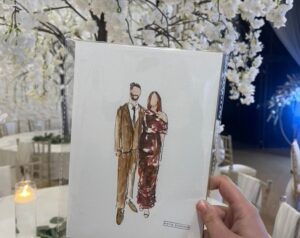
The few favour formats surviving in 2026 are the ones that feel handmade, local, or genuinely personal. Honey from a beekeeper near the venue. A small-batch jam from a local producer with a handwritten label. A live illustration of their family to take home and frame.
Generic sweet bags and miniature prosecco bottles: retired.
6. Sustainable and Local is No Longer Optional
Sustainability in weddings has moved from niche preference to baseline expectation over the past three years. In 2026, couples aren’t choosing local and sustainable because it’s ethical — they’re choosing it because it’s better.
Local flowers last longer, look more natural, and tell a more interesting story than imported blooms shipped from the Netherlands. Food sourced from nearby farms tastes better and provides more interesting menu options. Local suppliers tend to have closer relationships with venues and with each other, which means smoother days.
The sustainability conversation has also matured. It’s less about carbon footprints and more about connection. Who made this? Where did it come from? Does it belong to this place, this day, these people?
Couples who ask those questions consistently end up with weddings that feel more cohesive, more grounded, and more genuinely beautiful than those who don’t.
7. Live Music is Having a Significant Moment
Playlists are fine. But they’re not the same.
Live music does something for a room that even the most carefully curated Spotify playlist can’t replicate: it makes people feel physically present in a shared experience. There’s a reason the most memorable meals, the most magical evenings, the most alive moments tend to involve live sound.
In 2026, live music is one of the single biggest areas of increased spend in UK weddings. Couples who previously might have booked a DJ for the whole day are now splitting the budget: a string quartet or acoustic duo for the ceremony and drinks reception, then a band for the evening. Or a solo musician for the breakfast, something livelier later.
The wedding music industry has responded with more options at more price points than ever before. You can have a genuinely exceptional live musician for a drinks reception at a cost that isn’t far from a good playlist service. The value proposition has never been better.
8. Fine Art and Handmade Craft are Reshaping What Couples Commission
Across every part of the wedding industry that involves making something by hand — floristry, stationery, cake design, illustration, painting — there’s a clear and consistent movement toward fine art standards and away from mass-market production.
Couples are commissioning bespoke work rather than choosing from catalogues. They’re researching the specific aesthetic of a florist rather than describing a colour palette and hoping for the best. They’re finding artists whose style genuinely resonates and asking them to bring that style to the wedding.
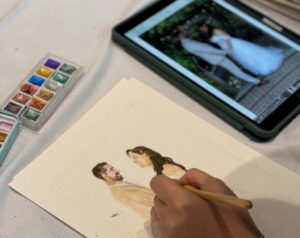
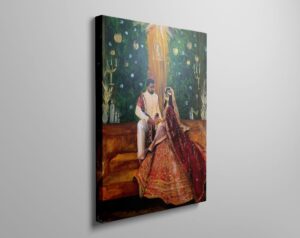
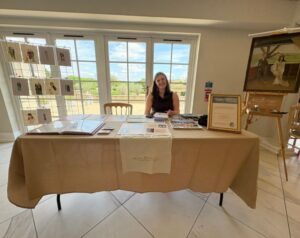
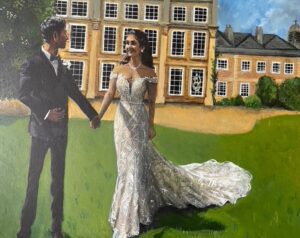
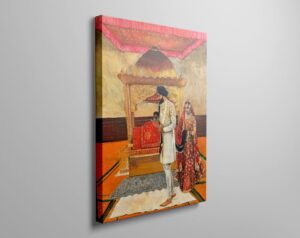
This extends to the wedding day experience itself. Live art — whether that’s a painter working at an easel during the reception or an illustrator drawing guests through the evening — has moved from novelty to considered choice. Couples booking live art in 2026 have usually researched multiple artists, looked carefully at portfolios, and chosen someone whose specific style suits their specific wedding. They know what they’re investing in.
The result is a different quality of work and a different quality of experience. When a couple has chosen an artist whose aesthetic genuinely aligns with their wedding, the painting or illustrations that result feel inevitable rather than incidental. They belong to the day.
9. The Welcome Weekend Has Become Standard for Destination and Country House Weddings
This is one of the clearest 2026 developments among couples marrying at exclusive use venues: the wedding is no longer a single day. It’s a weekend.
Friday evening arrivals with informal drinks and a relaxed dinner. Saturday the wedding itself. Sunday brunch before guests disperse.
The reasoning is simple: couples have invested significantly in bringing people they love to a beautiful place. A single day feels like not quite enough. The welcome weekend allows for the kind of conversations and connections that get crowded out of a wedding day proper — the quiet breakfast with the people who matter most, the easy Sunday morning that lets the whole thing breathe.
Venues offering accommodation — whether country house bedrooms, self-catering cottages, or nearby hotel blocks — are finding this is increasingly a deciding factor for couples at the booking stage.
10. The Reveal Moment is Being Designed, Not Discovered
This is a subtler trend but one I find genuinely interesting. Couples in 2026 are thinking more carefully about the emotional arc of their wedding day — the sequence of moments and how each one lands.
The first look. The ceremony entrance. The toast. The first dance. These have always been significant. What’s new is the level of intention being applied to the spaces between them — and to surprising elements that guests don’t anticipate.
A live artist’s reveal at the end of the evening is one example: a moment that wasn’t in anyone’s programme, that arrives unexpectedly, that produces a genuinely unrehearsed reaction from guests and couple alike. But the principle extends further. A handwritten note placed on every guest’s pillow in their room. An unexpected performance during the wedding breakfast. A private moment engineered for the couple away from the room.
The most memorable weddings of 2026 are the ones with at least one moment nobody saw coming. Surprise, it turns out, is one of the most valuable things a wedding can offer.
11. Dress Codes Are Getting Interesting Again
After years of the ambiguous “smart casual” instruction, dress codes are becoming more specific — and more fun — at the more creative end of the wedding market.
Black tie is back for evening receptions at formal venues. But so are much more playful instructions: “wear something you’d dance in.” “Floral encouraged.” “Dress for a garden party in 1920.” “Colour only — no black, no grey.”
These instructions do something useful: they tell guests something about what kind of wedding to expect. They set a tone. They give guests who enjoy dressing up something to work with, and they create a room that looks more considered and more alive.
Not every couple wants to do this. But those who do are finding that a specific dress code instruction transforms both the atmosphere of the room and the quality of the photographs.
12. Unplugged Ceremonies Are Now the Majority
A few years ago, the unplugged ceremony — asking guests to put phones away and simply be present — was still a request that required some management. Some guests found it unusual. Some resisted.
In 2026, it has become the expected norm at thoughtfully planned weddings. Couples request it confidently. Guests comply without complaint. The professional photographer captures the moment unimpeded by a forest of raised screens. And the ceremony has a quality of collective presence that everyone in the room can feel.
The irony noted by many photographers: the weddings with the strictest no-phone ceremonies tend to produce the most shared social media content afterward, because the professional images are so much better.
What All of This Adds Up To
The thread running through every trend in this list is the same one: less performance, more presence.
Less designed for the camera. More designed for the room. Less generic. More personal. Less about impressing people who weren’t there. More about genuinely delighting the people who were.
The weddings I work at in 2026 that have this quality — the ones that feel like they were made by people who love each other, for people they love, in a place that suits them — are the ones I remember. They’re the ones guests remember. They’re the ones that produce the most extraordinary photographs, the most emotional reactions at the end of the evening, the most enduring stories.
That’s not a trend that goes away. That’s just what a great wedding is.
Katie Bowden is a live wedding painter and guest illustrator based in Birmingham, working at weddings across the Midlands and beyond. Visit katiebowden.co.uk to find out more